

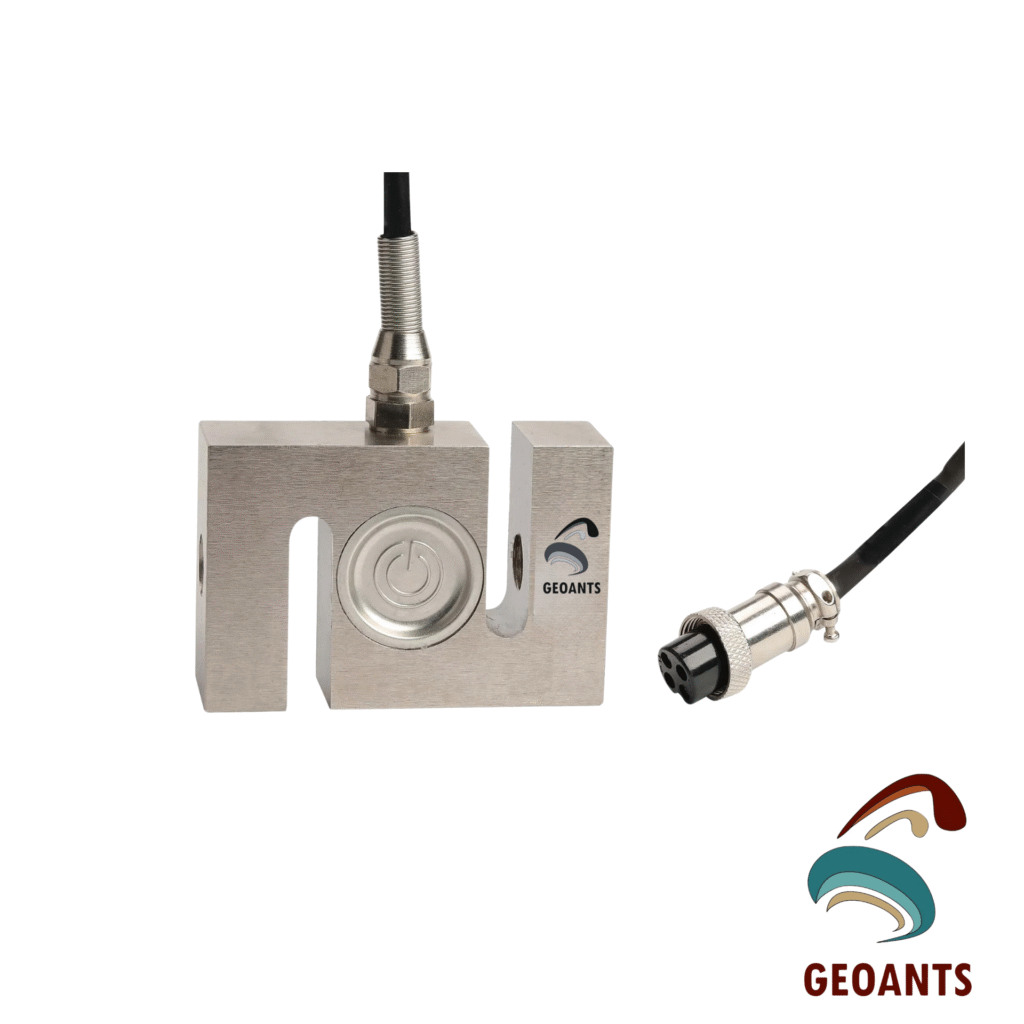


Load Cells and Stress Meters
Load Cells
Product description
A load cell is a transducer that converts the stress or strain (or buckling effect) created by an applied load/force into an electrical signal. Depending on the load cell and circuit type, this output signal may be a change in voltage, current, or frequency.
When subjected to sudden load changes, the load cell generates an output response—in other words, load cells behave like a spring, measuring by undergoing a small deformation. Load cells are used in many fields, and they are common wherever weighing operations are widespread, such as laboratories and manufacturing plants.
Notes
- The product price indicated under the connection header applies to the green-colored header.
- For alternative connection header options, please contact us.
- The price provided for the terminal (connector) includes labor.
Technical Specifications
High-Durability Load Cells with Various Capacities
- Application: Batch Process Scale
- Model: YZC-516C
Specifications
- Capacity (t): 0.1, 0.2, 0.3, 0.5, 1, 2
- Rated output (mV/V): 2.0 ± 0.05
- Accuracy class: C2
- Maximum number of verification intervals (nmax): 2000
- Minimum load cell verification intervals (Vmin): Emax / 5000
- Combined error (%RO): < ±0.030
- Creep (%RO / 30 min): 0.02
- Temperature effect on sensitivity (%RO/°C): 0.0017
- Temperature effect on zero (%RO/°C): 0.005
- Zero balance (%RO): ±1.0
- Input resistance (Ω): 365 ± 5
- Output resistance (Ω): 350 ± 3
- Insulation resistance (MΩ @ 50 V): 5000
- Recommended excitation voltage (V): 5–12
- Compensated temperature range (°C): -10 to +40
- Operating temperature range (°C): -30 to +80
- Safe overload (%RO): 150
- Ultimate overload (%RO): 200
- Load cell material: Alloy steel
- Connection cable: Ø5.0 × 3.5 m